Grease Trap Service in Seattle
Grease trap service keeps commercial kitchen wastewater moving by removing fats, oils, grease, food solids, and sludge before they restrict the plumbing system. Seattle Plumbers provides grease trap cleaning, grease trap pumping, grease interceptor service, grease trap repair, inspection, replacement, and related commercial drain service for restaurants, cafés, food service facilities, and other Seattle businesses.
A properly serviced grease trap protects downstream drain lines, supports sanitary kitchen conditions, and reduces the risk of backups, foul odors, slow drainage, and emergency plumbing interruptions.
Grease Trap Cleaning and Pumping for Commercial Kitchens
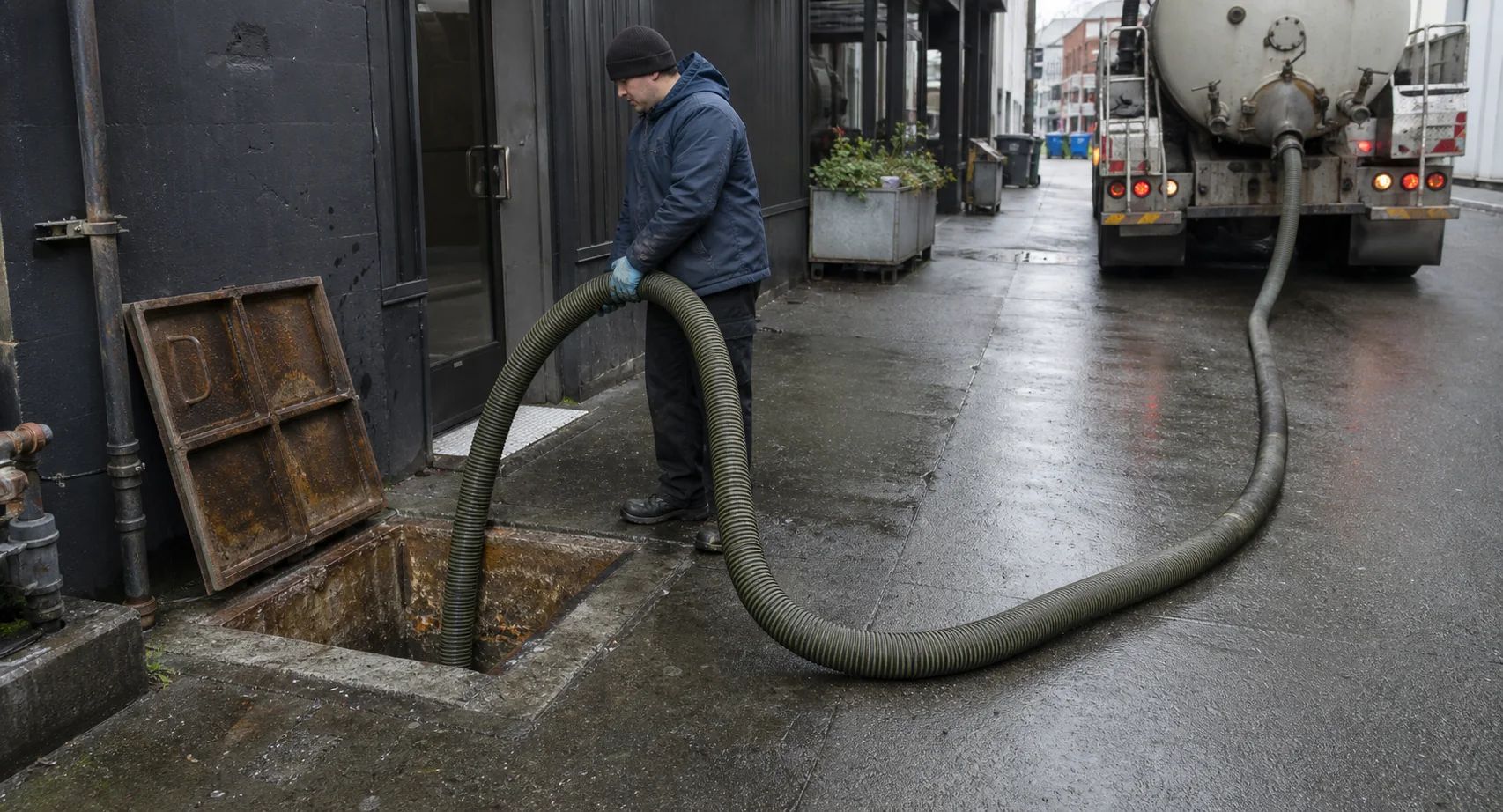
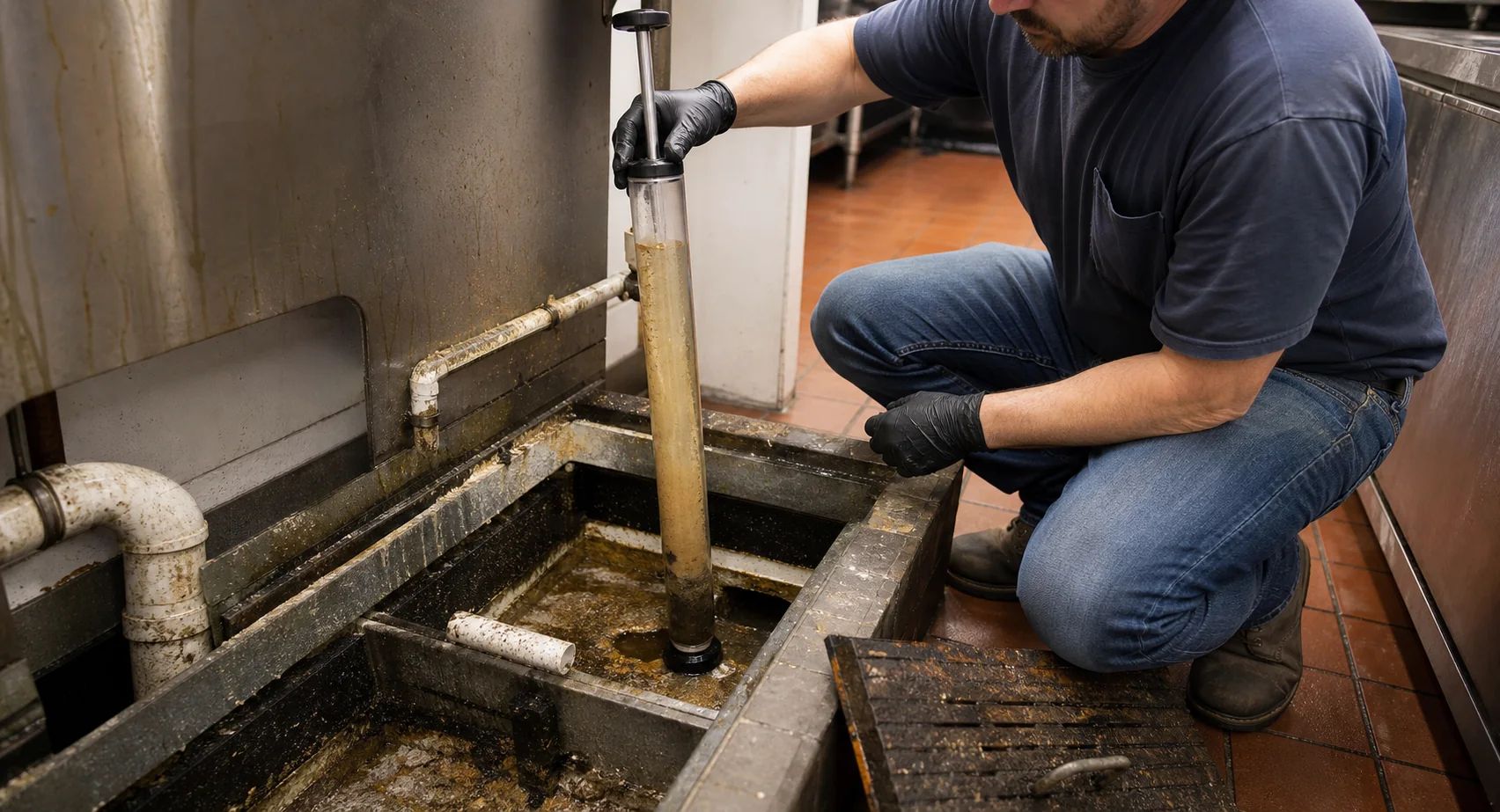
Grease trap cleaning and pumping for commercial kitchens removes accumulated FOG, wastewater, and food solids from the interceptor chamber. As grease and sludge build inside the tank, available capacity drops and wastewater flow can slow.
Our plumbers and grease trap technicians access the unit, remove retained waste, scrape grease from interior surfaces, clean baffles, inspect inlet and outlet components, and check the trap for damage before closing the system.
Grease trap pumping removes the collected contents. Grease trap cleaning removes the residue that remains on the tank walls, baffles, fittings, inlet, and outlet. Performing both services helps restore usable capacity and reliable drainage.
Common Grease Trap Problems We Repair
Common grease trap problems we repair include damaged baffles, leaking seals, broken fittings, cracked access covers, restricted inlet pipes, blocked outlet pipes, corroded components, and recurring wastewater flow problems.
Seattle Plumbers provides grease trap repair services for problems such as:
- Grease trap leaks
- Damaged or missing baffles
- Cracked grease trap lids
- Failed access cover seals
- Blocked inlet connections
- Restricted outlet connections
- Broken fittings
- Corroded components
- Recurring grease clogs
- Wastewater backups
- Poor FOG separation
- Slow interceptor drainage
- Loose pipe connections
- Damaged drain connections
A targeted grease trap repair can restore operation when the tank and main interceptor structure remain serviceable.
Warning Conditions That Call for Service
Warning conditions that call for service usually appear when FOG and solids have reduced interceptor capacity or when a component has failed. Early inspection gives our technicians a chance to clean, pump, unclog, or repair the system before the problem interrupts kitchen operations.
Watch for:
- Slow kitchen sinks
- Gurgling drains
- Foul grease odors
- Standing wastewater
- Grease around the access lid
- Overflowing wastewater
- Floor drain backups
- Repeated kitchen drain clogs
- Thick grease deposits
- Excessive food solids
- Grease trap leakage
- Poor drainage after cleaning
A full grease trap can restrict wastewater flow. A blocked outlet can cause backups. A damaged baffle can reduce separation performance. Inspection identifies which condition is affecting the system.
Grease Trap Repair for Restaurants
Grease trap repair for restaurants corrects mechanical and plumbing problems that cleaning alone cannot solve. High-volume kitchens send large amounts of wastewater, fats, oils, grease, and food particles through the interceptor every day, so worn or damaged components can quickly affect drainage.
Our restaurant grease trap repair services can include inlet repair, outlet repair, baffle repair, fitting replacement, gasket replacement, access cover repair, pipe connection repair, leak correction, and flow restriction removal.
When recurring drain problems continue after pumping, we inspect the interceptor and connected piping to find the actual restriction or failed component.
Grease Interceptor Repair
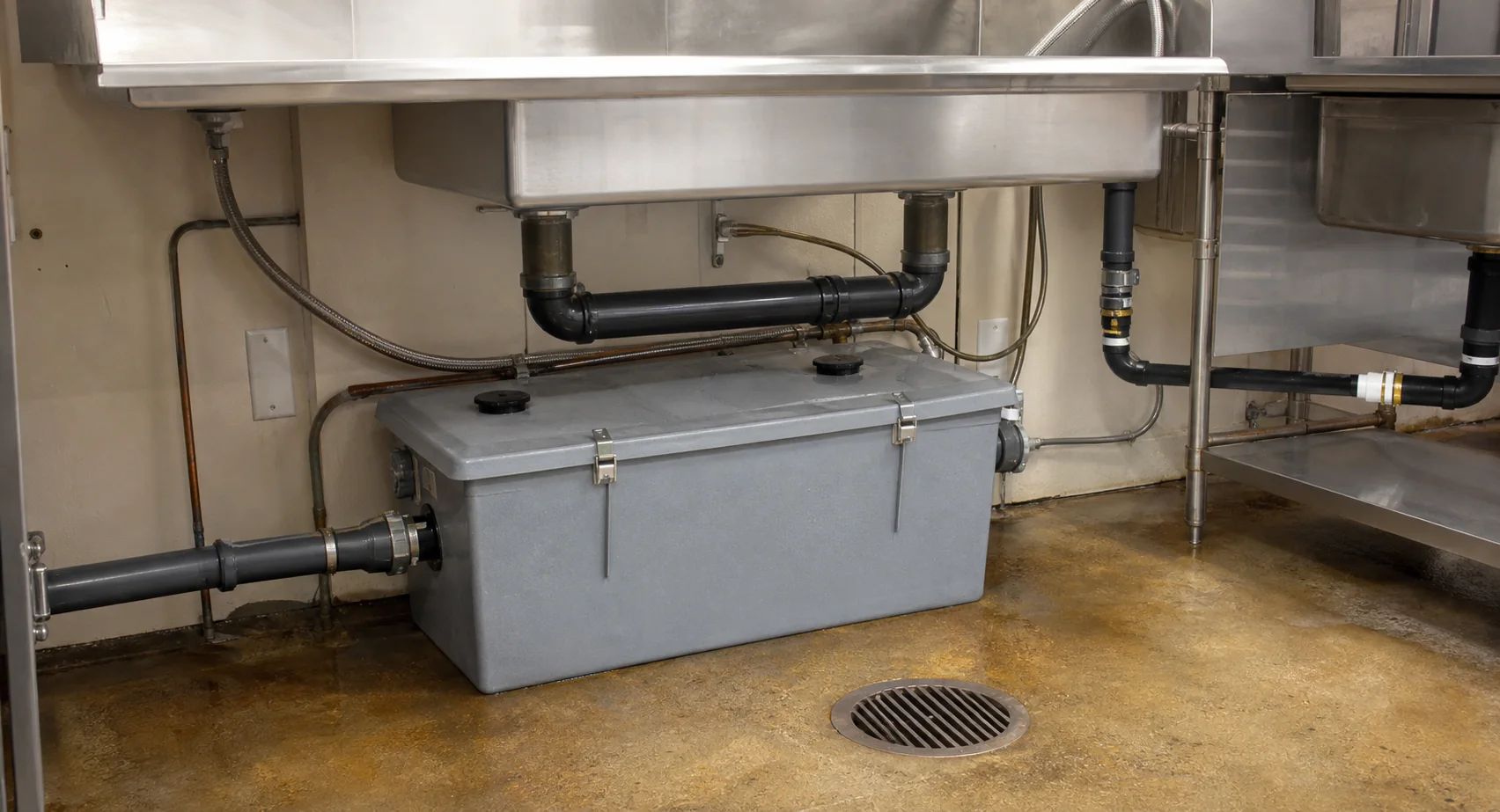
Grease interceptor repair addresses larger commercial systems that collect FOG before wastewater enters downstream plumbing. Outdoor interceptors and large-capacity units can develop damaged lids, corroded fittings, blocked inlet or outlet piping, deteriorated baffles, leaks, and excessive sludge buildup.
Our commercial grease interceptor service can include:
- Grease interceptor inspection
- Grease interceptor pumping
- Grease interceptor cleaning
- Grease interceptor repair
- Grease interceptor leak repair
- Baffle replacement
- Inlet pipe repair
- Outlet pipe repair
- Access cover replacement
- Connected drain cleaning
We inspect the interceptor first, determine whether the problem is mechanical, structural, or drainage-related, and recommend the required service.
Grease Trap Clog Removal
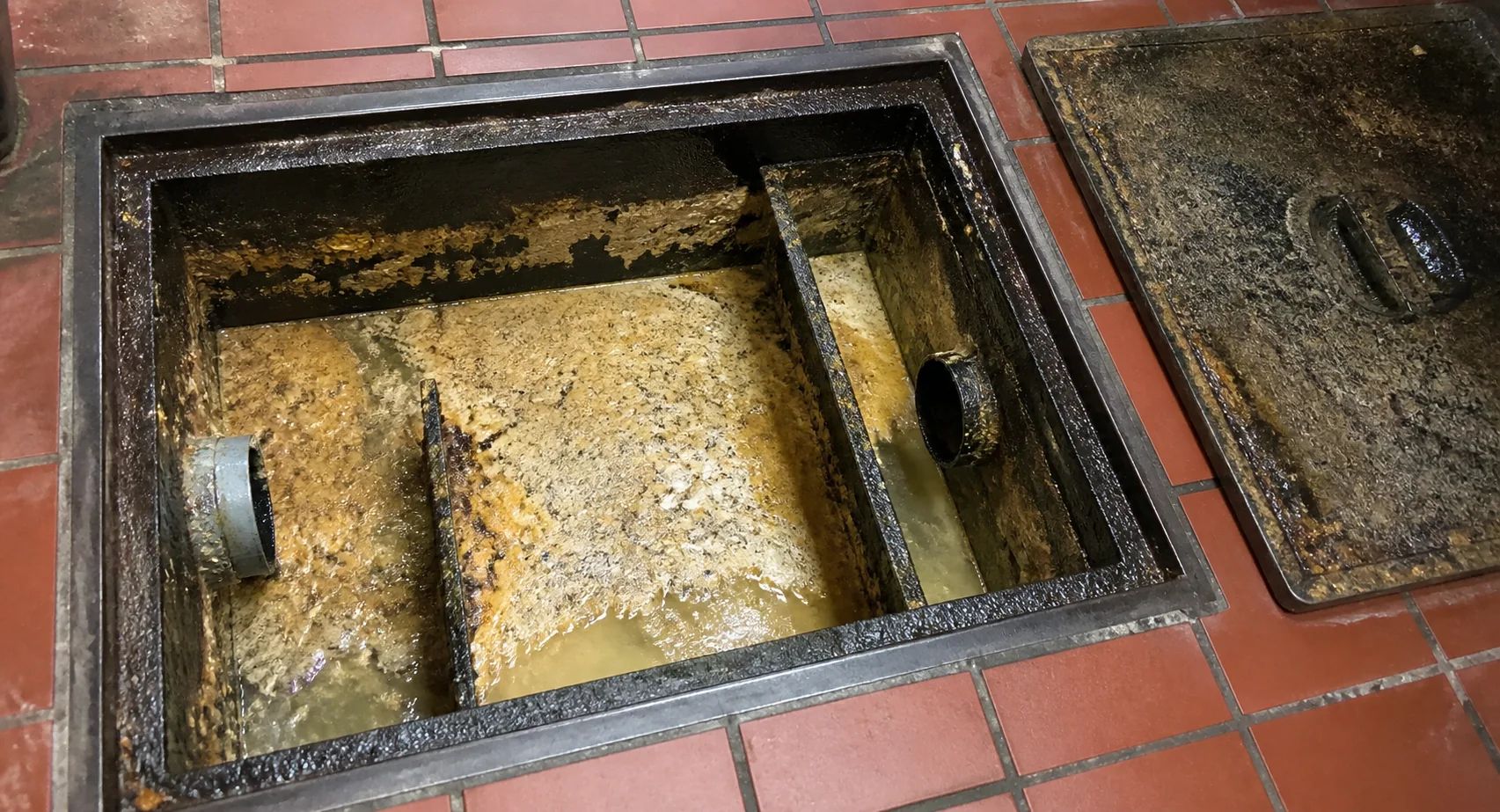
Grease trap clog removal clears hardened fats, oils, grease, food debris, and sludge that restrict wastewater movement. A clog may form inside the trap, at the inlet, at the outlet, or farther into the connected drain line.
Our plumbers locate the restriction and clear the affected section using the method that fits the pipe condition and blockage.
When grease has coated the connected drain line, additional commercial drain cleaning may be required to restore normal flow.
Hydro Jetting for Grease-Clogged Drain Lines
Hydro jetting for grease-clogged drain lines uses high-pressure water to remove grease deposits and debris from suitable commercial drainage piping. It can help clear pipe walls that have accumulated heavy FOG beyond the grease trap itself.
Grease trap cleaning handles the interceptor. Hydro jetting handles grease accumulation inside connected drain piping.
Seattle Plumbers can inspect the drainage problem and determine whether pumping, mechanical drain cleaning, hydro jetting, grease trap repair, or a combination of services is appropriate.
Grease Trap Inspection
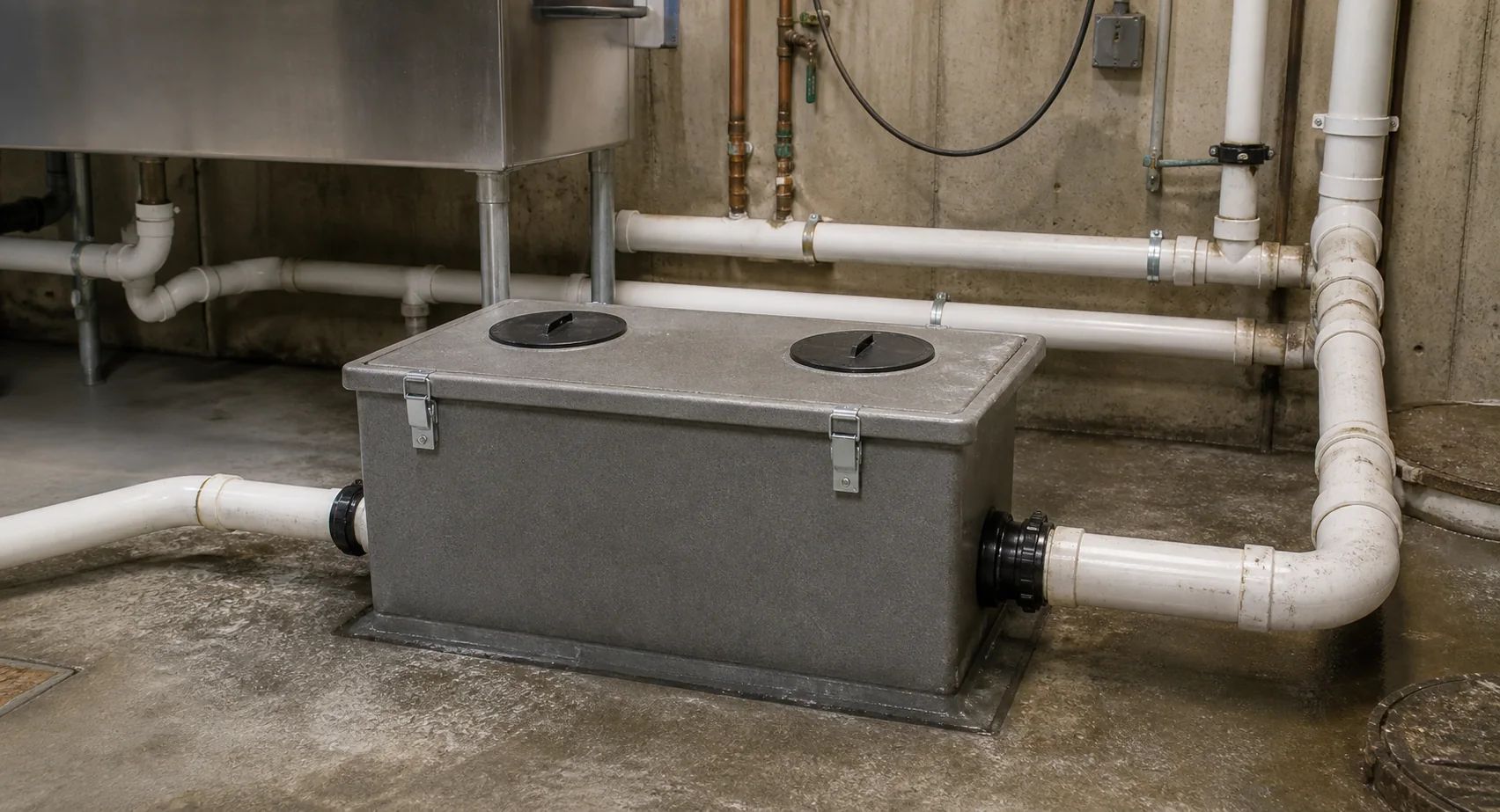
Grease trap inspection identifies buildup, damage, restricted flow, and component wear before they create larger plumbing problems. We check grease depth, solids accumulation, tank condition, inlet flow, outlet flow, baffles, lids, fittings, seals, and connected piping.
Inspection can help identify:
- Excessive grease layers
- High solids levels
- Damaged baffles
- Corrosion
- Tank leakage
- Blocked piping
- Poor wastewater flow
- Damaged access covers
- Worn seals
- Improper drainage
- Reduced interceptor capacity
The inspection findings determine whether the unit needs cleaning, pumping, repair, replacement, or drain clearing.
Grease Trap Repair or Replacement
Grease trap repair or replacement depends on the condition of the tank, internal components, plumbing connections, and overall capacity. Minor leaks, damaged fittings, faulty seals, and replaceable baffles may be repairable, while severe corrosion, structural cracking, repeated failure, or inadequate capacity can make replacement more practical.
Repair fixes a serviceable unit. Replacement removes a failed or unsuitable interceptor and installs a new system sized for the commercial kitchen.
We inspect the existing equipment before recommending either option.
Grease Trap Replacement
Grease trap replacement installs a new interceptor when the existing unit is cracked, badly corroded, undersized, structurally damaged, or no longer reliable. Replacement may also be considered during commercial kitchen renovation or when increased food service volume changes wastewater and FOG demands.
Our plumbers can assess:
- Existing trap capacity
- Kitchen volume
- Pipe connections
- Inlet and outlet locations
- Access requirements
- Wastewater flow
- Interceptor condition
- Connected drain condition
Correct sizing and secure connections help the new system separate FOG and maintain dependable wastewater flow.
Routine Maintenance for High-Volume Kitchens
Routine maintenance for high-volume kitchens removes grease and solids before buildup reaches a level that restricts the interceptor. Restaurants, bakeries, hotels, cafés, delis, food courts, commissaries, and institutional kitchens may require regular service based on cooking volume and wastewater conditions.
Scheduled maintenance can include:
- Grease trap pumping
- Grease trap cleaning
- Grease interceptor cleaning
- FOG removal
- Food solids removal
- Baffle inspection
- Inlet and outlet inspection
- Drain flow checks
- Service documentation
Regular service helps reduce emergency backups, odor complaints, and recurring clogs.
Restaurant and Food Service Facilities We Serve
Restaurant and food service facilities we serve include businesses that depend on reliable commercial kitchen drainage throughout the day.
Seattle Plumbers services grease traps and grease interceptors for:
- Restaurants
- Cafés
- Coffee shops
- Bakeries
- Bars
- Delis
- Hotels
- Grocery stores
- School cafeterias
- Hospital kitchens
- Food courts
- Catering facilities
- Commissary kitchens
- Commercial kitchens
- Institutional kitchens
Each facility produces different amounts of FOG and food solids, so service frequency and repair needs can vary.
Our Service Process
Our service process removes accumulated waste, checks the interceptor, repairs accessible problems, and confirms wastewater flow before the job is complete.
- Access the grease trap or interceptor
- Inspect grease and solids levels
- Pump wastewater, grease, and sludge
- Remove food solids
- Scrape interior grease buildup
- Clean baffles, inlet, and outlet components
- Inspect fittings, seals, lid, and tank condition
- Repair accessible damaged components when approved
- Clear connected drain restrictions when required
- Reseal the trap and check wastewater flow
This process helps separate routine cleaning needs from grease trap repair issues that require additional plumbing work.
How Often Should a Grease Trap Be Serviced?
How often a grease trap should be serviced depends on trap capacity, kitchen volume, menu, FOG production, food solids, and the rate at which the interceptor fills. High-volume commercial kitchens may require more frequent pumping than businesses with lighter food preparation.
The best service interval comes from actual buildup conditions. Regular inspections help determine how quickly grease and solids accumulate and allow maintenance to be scheduled before overflow or blockage occurs.
Grease Trap Odor and Backup Problems
Grease trap odor and backup problems often develop when retained grease, decomposing food solids, restricted outlets, or neglected maintenance interfere with normal operation. Cleaning removes accumulated waste, while inspection identifies damaged components or drain restrictions that may continue causing odors after pumping.
A foul smell does not always mean the trap only needs cleaning. A leaking lid seal, damaged fitting, blocked outlet, or downstream drain problem can produce similar symptoms.
Seattle Plumbers diagnoses the source before recommending the solution.
Emergency Grease Trap Repair
Emergency grease trap repair addresses conditions that threaten to stop kitchen drainage or create unsanitary wastewater problems. Overflowing interceptors, severe leaks, blocked outlets, damaged covers, and backed-up commercial drains can interrupt food service operations quickly.
Our emergency grease trap service may include pumping, clog removal, drain clearing, leak repair, fitting repair, component replacement, and wastewater flow restoration.
If the interceptor is structurally failed, we can assess whether temporary repair or grease trap replacement is required.
Grease Trap Service for Seattle Businesses
Grease trap service for Seattle businesses gives restaurants and commercial kitchens a local plumbing resource for cleaning, pumping, repair, inspection, drain clearing, and interceptor replacement. Seattle Plumbers works with food service properties throughout Seattle and surrounding King County areas.
Our commercial grease trap services include:
- Grease trap cleaning Seattle
- Grease trap pumping Seattle
- Grease trap repair Seattle
- Grease interceptor service Seattle
- Restaurant grease trap repair
- Commercial grease trap repair
- Grease trap leak repair
- Grease trap clog repair
- Grease interceptor repair
- Emergency grease trap repair
- Grease trap maintenance
- Commercial kitchen drain cleaning
- Hydro jetting for grease buildup
We focus on clearing the immediate problem and identifying the condition that caused it.
Why Choose Seattle Plumbers
Seattle Plumbers provides direct, practical service for grease trap and commercial kitchen plumbing problems. Our plumbers inspect the system, explain the cause, remove buildup, repair damaged components, clear restricted piping, and recommend replacement only when the existing unit cannot provide dependable service.
Commercial kitchens need reliable drainage to stay open and sanitary. We approach each service call with that operating need in mind.
Schedule Grease Trap Service in Seattle
Schedule grease trap service in Seattle when your interceptor is full, leaking, clogged, overflowing, producing odors, draining slowly, or showing signs of mechanical damage. Seattle Plumbers provides grease trap pumping, grease trap cleaning, grease trap repair, grease interceptor repair, replacement, hydro jetting, and commercial drain service for local food service businesses.
Call Seattle Plumbers to request service, schedule routine maintenance, or arrange an inspection for a recurring grease trap problem.
Grease Trap Service FAQs
What is included in grease trap service?
Grease trap service can include pumping, grease removal, solids removal, tank cleaning, baffle cleaning, inlet and outlet inspection, component checks, drain flow testing, repair, and maintenance recommendations.
Can a damaged grease trap be repaired?
A damaged grease trap can often be repaired when the main tank remains structurally sound. Common repairs include baffle replacement, fitting repair, seal replacement, lid repair, inlet repair, outlet repair, and pipe connection repair.
Why does my grease trap keep clogging?
A grease trap may keep clogging because of excessive FOG buildup, food solids, insufficient cleaning frequency, a restricted inlet, a blocked outlet, or grease buildup inside downstream drain lines.
Can you repair a leaking grease trap?
A leaking grease trap may be repairable depending on where the leak originates. We inspect seals, fittings, pipe connections, covers, and the tank to determine whether repair or replacement is appropriate.
What happens if a grease trap becomes too full?
A grease trap that becomes too full loses effective capacity and can restrict wastewater flow, create foul odors, contribute to clogs, or cause wastewater backups.
Do you clean large grease interceptors?
Yes. Commercial grease interceptor service can include pumping, cleaning, solids removal, inspection, component repair, inlet and outlet service, and connected drain cleaning.
When should a grease trap be replaced?
A grease trap may need replacement when it has severe corrosion, structural cracking, repeated leaks, major component failure, inadequate capacity, or recurring problems that cannot be corrected with normal cleaning and repair.
Can you clear grease from connected drain lines?
Yes. Connected commercial drain lines can be cleaned when grease buildup extends beyond the interceptor. Depending on pipe condition and blockage severity, service may include mechanical cleaning or hydro jetting.
Can I schedule recurring grease trap maintenance?
Recurring grease trap maintenance can help commercial kitchens control FOG buildup, reduce emergency clogs, and keep interceptor servicing on a consistent schedule.